Update 3/12/20. Juice Plus is one of the most popular whole food supplements out there. It's been around many years. In the past, I have taken it and am familiar with it. I am not a Juice Plus distributor or associated with the company. In this review, I'll attempt to answer your questions. I'll also take a look at what's out there on Juice Plus side effects. If you have a question, post it below and I'll try to help you.
Does Juice Plus Have Side Effects?
For the vast majority of people, Juice Plus is very safe. It's just-food. I've taken Juice Plus for over a year and did not notice any side effects. Most people also report no side effects either. That said, when you have a supplement that millions and millions of people take, from time to time, some may report side effects. Below is a list of those which have been reported in medical journals
In one report, a 51-year-old woman with endometrial cancer developed liver problems after starting Juice Plus. The liver problems got better 4 weeks after stopping the supplements. Did JP cause this? This is difficult to say since this was just a report of one person who had these symptoms. Also, the person did have cancer, and this may have played a role.
Here's a short list of things to think about when taking this supplement:
- start with less than recommended for the first week to see how you respond,
- taking it with food may help absorption and reduce any GI effects you may experience,
- if you take blood thinner medicine, talk to your doctor first. Juice Plus has vitamin K. Vitamin K plays a role in blood clotting. In theory, it may reduce how well blood thinners work.
- If you take any medications, talk to your doctor. There's a lack of research in drug interactions.
- Stop taking the supplement at least 2 weeks before surgery.
Does Juice Plus Sponsor Research?
Most of the research on the supplement is supported or sponsored by National Safety Associates (NSA), the company that makes this product. This is a legitimate company that's been around since 1993. It’s because of this that some people wonder if Juice Plus is a scam. Detractors say “they sponsor their own research.” To that, I say, “if they don't do it, who will?”
I appreciate it when a company puts in the time and effort to test its supplements. I can tell you most supplement companies do not do this.
The company has said they do not influence the outcomes of Juice Plus research. Some of the people who have done Juice Plus research have had ties to NSA. People might argue this opens up the possibility of bias on the part of the researchers. That said, I am not sure how strong this argument is because some of the studies seem to contradict each other. If there was a big conspiracy to hide the truth, then the research would be in more agreement.
Bottom line: I don't think the supplement is a scam. I'm OK with company-sponsored research as long as its quality. What I see in this case is quality research for the most part.
Is It FDA Approved?
No, it's not, and here's why. The food and drug association (FDA) does not approve dietary supplements. No supplement is FDA-approved. There is FDA regulation, however. FDA Approval and regulation are different. The regulation of dietary supplements is called DSHEA. You can learn more about DSHEA on my FAQ page.
Does Juice Plus Cure Disease
No study has ever shown the supplement has cured any disease. The company that makes JP does seem to be directing its research toward showing how it can reduce the risk of disease. As Ben Franklin once said, An ounce of prevention is better than a pound of cure.
Juice Plus vs. Vineyard Blend
The flagship JP supplement contains extracts of many different fruits and vegetables, while the Vineyard Blend has extracts from different berries and grapes.
Grapes and berries are healthy and contain healthy phytonutrients like resveratrol. That said, the majority of research is on the original Juice Plus – the stuff that's been around since 1993. Personally, I'd like to see more research on the Vineyard Blend.
I'd love to see a study comparing regular JP to the Vineyard Blend to see what their differences are.
The Juice Plus Enzymes
There do appear to be enzymes added to the supplement. I don't think the enzymes add anything to the benefits of the supplement. Enzymes are proteins. Just like other proteins, the enzymes would be destroyed in the stomach. For those with digestion problems, they may help. But for most people, I'm skeptical.
What About Weight Loss?
This is not a weight loss supplement. The supplement is not promoted to help people lose weight. I've taken this supplement for up to a year and did not notice any reduction in body weight. If the supplement gets you to start eating more fruits and vegetables, then I can see how it might help. But, that's because you'd be reducing calories more than anything else.
Is It The Same As Fruits And Vegetables?
They often call Juice Plus “the next best thing to fruits and vegetables,” but this is basically a marketing slogan. It's meant to drive home the message the supplement comes from real foods. To their credit, even the company website says it's not a substitute for eating real fruits and vegetables.
One difference is the JP supplement has practically no fiber. Fiber is very important for health. Also, research notes people who eat more fruits and vegetables get fewer diseases. If taking the supplement gets you to think about eating more fruits and vegetables, then that is a very good thing.
Since its inception, there have been many green foods and other supplements out there. Are they better or different? Here's a quick rundown of some of the popular competitors.
Does It Make You Poop?
The research does not show a change in bathroom frequency, but it's possible in some people this may occur. While the supplement has very little fiber, in theory, JP may alter gut health. By altering the microbiome, more frequent trips to the bathroom may occur. This is 
 speculation, though. If the supplement changed your bathroom trips, leave a comment below.
Does It Have Iron?
No. There is no iron added to the supplement. If its present, it's in very low amounts and due to naturally occurring mineral in the foods that make up the supplement.
Does It Contain Magnesium?
The magnesium present in the supplement comes from what is naturally found in foods. Generally, foods that contain fiber and/or are green will contain magnesium. The amount of magnesium will vary between bottles due to the supplement being a powder. Some bottles may have more or less magnesium than others.
Does It Contain Soy?
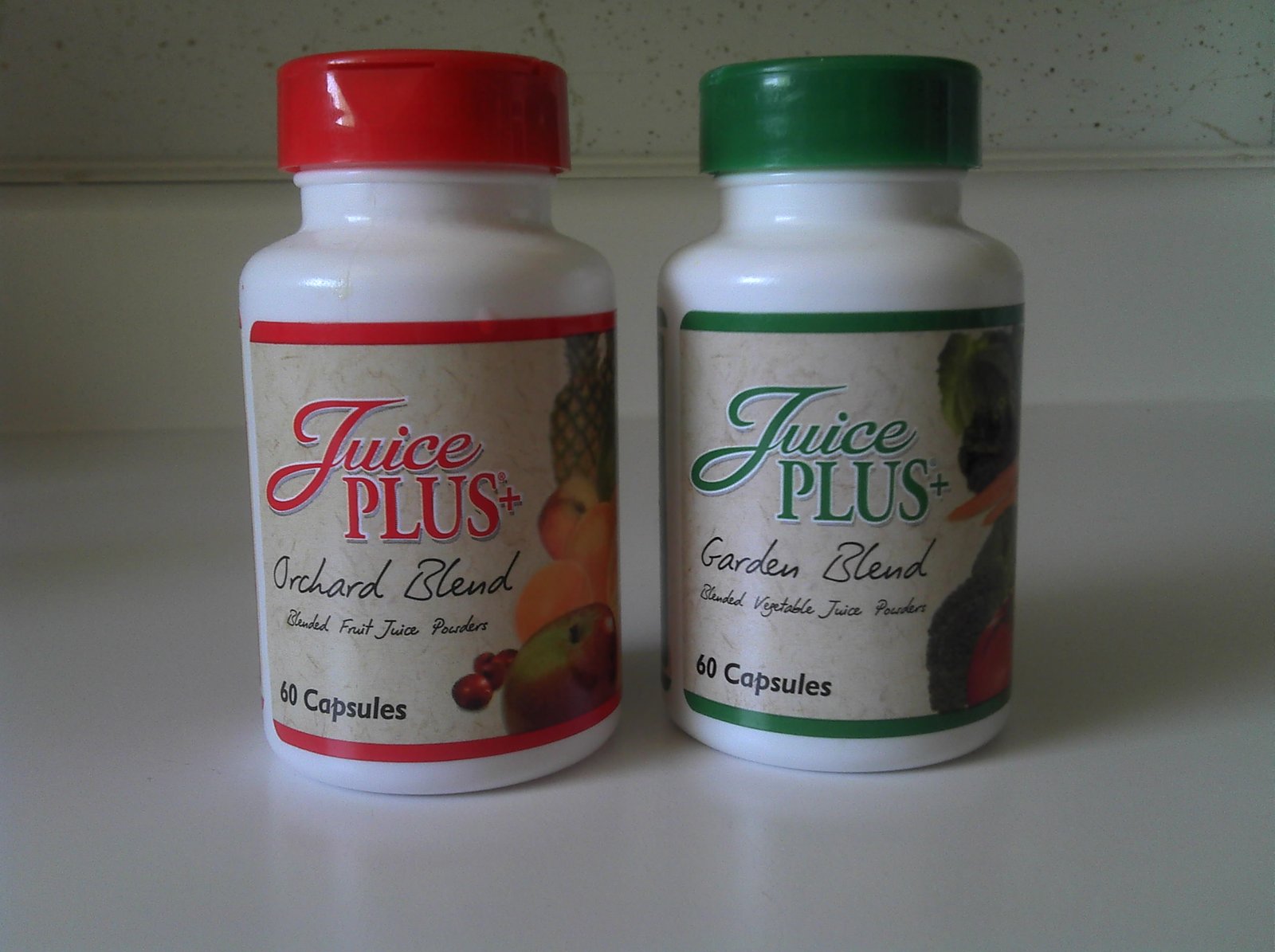
There is no soy in the flagship JP capsules or Orchard Blend. The protein powder, however (Juice Plus Complete) does contain soy. Each scoop of Complete has 13 grams of protein.
Does It Have Folic Acid?
Yes, it does. Folate – the natural form of the vitamin -is found in the supplement. The amount of folate will vary from bottle to bottle because the supplement is in powder. Juice Plus does not contain any synthetic folic acid. Folate is the natural form of this vitamin. Folic acid is the synthetic form.
Juice Plus vs. MonaVie
MonaVie is another popular food extract supplement. In my view, the biggest difference between Juice Plus and MonaVie is the research. Juice Plus has several human studies. There is less research on MonaVie. More than that, however, there seem to be no clinical studies comparing them to each other. For more insights, see:
Juice Plus vs. Juice Festive
Juice festive is another popular whole food supplement, often found at Cosco, Sames Club, etc. I'm not aware of any head-to-head comparisons between these two supplements.
See the review of Juice Festive for more information about that product.
Juice Plus vs. Texas SuperFood
Texas superfood is another whole food supplement people often ask about. Like Juice Festive, I'm not aware of any studies comparing these products to each other.
See the review of Texas SuperFood for more about that supplement.
Does Juice Plus Work?
To be honest, I like Juice Plus. It's just the extracts of several fruits and vegetables in powdered form. It doesn't have anything crazy in it, and there are various clinical studies showing it may have benefits. For me, it's the research that's most important. While it's not a substitute for eating a salad, my hope is if you take it, you'd eventually wonder what else you can do to improve your health. If this gets you to eat that salad, then it's a step in the right direction.


 See the review on


 sure. So why take the chance?